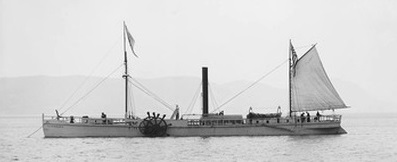
(Source: "Steamer Clermont"; Library of Congress)
A 1909 Replica of the Clermont
Paddle-Wheelers
Paddle-wheelers made river travel efficient.
“Most steamboats built in the 19th and 20th centuries had paddlewheels. Most steamboats shared a basic design; they had a hull, or body, made of timber and a wooden paddlewheel. Most 20th century steamboats had steel hulls. The paddlewheel had a circular center with spokes coming from it like a bicycle wheel. Planks were attached to the spokes to make the paddle. Boats with paddlewheels on the side are called sidewheelers. Boats with a paddlewheel at the rear are called sternwheelers” (“A History of Steamboats”).
Paddle-wheelers were mainly used for settlement and commerce.
In 1807, Robert Fulton's Clermont, one of the first successful paddle-wheelers, traveled up the Hudson River.
“Most steamboats built in the 19th and 20th centuries had paddlewheels. Most steamboats shared a basic design; they had a hull, or body, made of timber and a wooden paddlewheel. Most 20th century steamboats had steel hulls. The paddlewheel had a circular center with spokes coming from it like a bicycle wheel. Planks were attached to the spokes to make the paddle. Boats with paddlewheels on the side are called sidewheelers. Boats with a paddlewheel at the rear are called sternwheelers” (“A History of Steamboats”).
Paddle-wheelers were mainly used for settlement and commerce.
In 1807, Robert Fulton's Clermont, one of the first successful paddle-wheelers, traveled up the Hudson River.
 (Source: "The Delta Queen"; The Economist) The Delta Queen
|
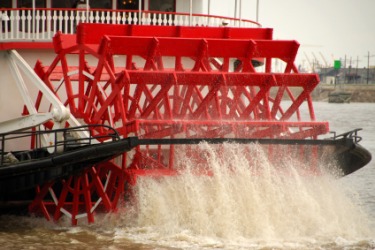 (Source: "A Paddle Wheel on an Old Steamboat"; YourDictionary) A Paddle-Wheel
|

The first steam-powered tugboat “was the Charlotte Dundas which was built in 1802 by William Symington” (“Steamships”).
By 1825, steam-powered tugboats were shown to work well.
“The first boat to serve exclusively as a tugboat in [New York\ Harbor was the Rufus King, in 1828” (“Wild Blue Yonder”).
By 1825, steam-powered tugboats were shown to work well.
“The first boat to serve exclusively as a tugboat in [New York\ Harbor was the Rufus King, in 1828” (“Wild Blue Yonder”).
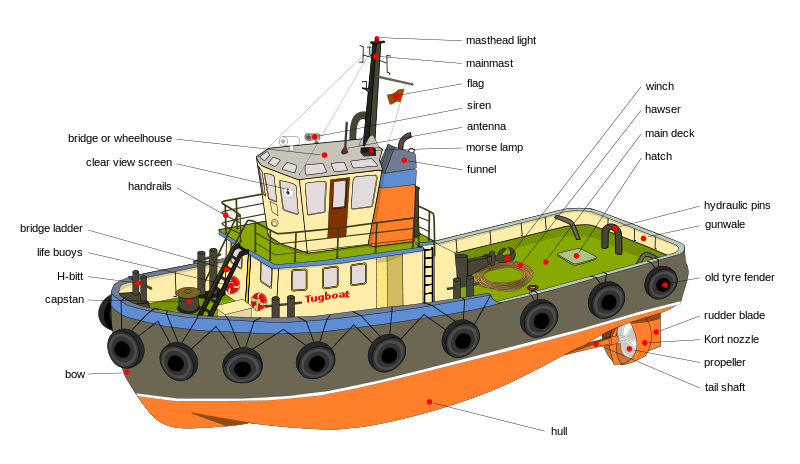 (Source: "Tugboat Diagram"; Wikimedia Commons) Tugboat Diagram
|
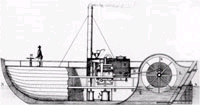 (Source: "Charlotte Dundas - the First Tug Boat in the World"; Jadranski Pomorski Servis D.D. Rijeka) The Charlotte Dundas
|
SnagboatsSnagboats removed snags that hindered river navigation from waterways.
“Sometimes, the damage from hitting a snag was so bad it caused boats to sink! Snagboats lessened this problem by using a boom and grapple to remove snags from the river making it safe for travel” (“A History of Steamboats”). The first snagboat was Henry Miller Shreve's Heliopolis ("The U.S. Snagboat Montgomery"). "The U.S. Snagboat Montgomery . . . is one of the last two sternwheel snagboats in the United States" ("U.S. Snagboat Montgomery"). The other is the W.T. Preston. |
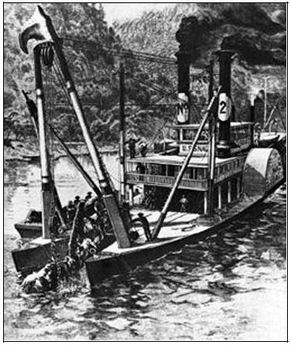 (Source: "Shreve's Heliopolis"; Mobile District, U.S. Army Corps of Engineers) The Heliopolis
|
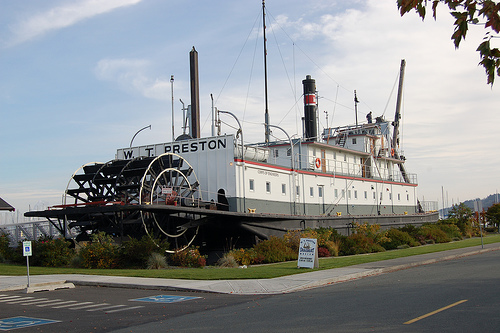 (Source: "W.T. Preston"; Flickr) The W.T. Preston at the Anacortes Museum in
Anacortes, Washington |
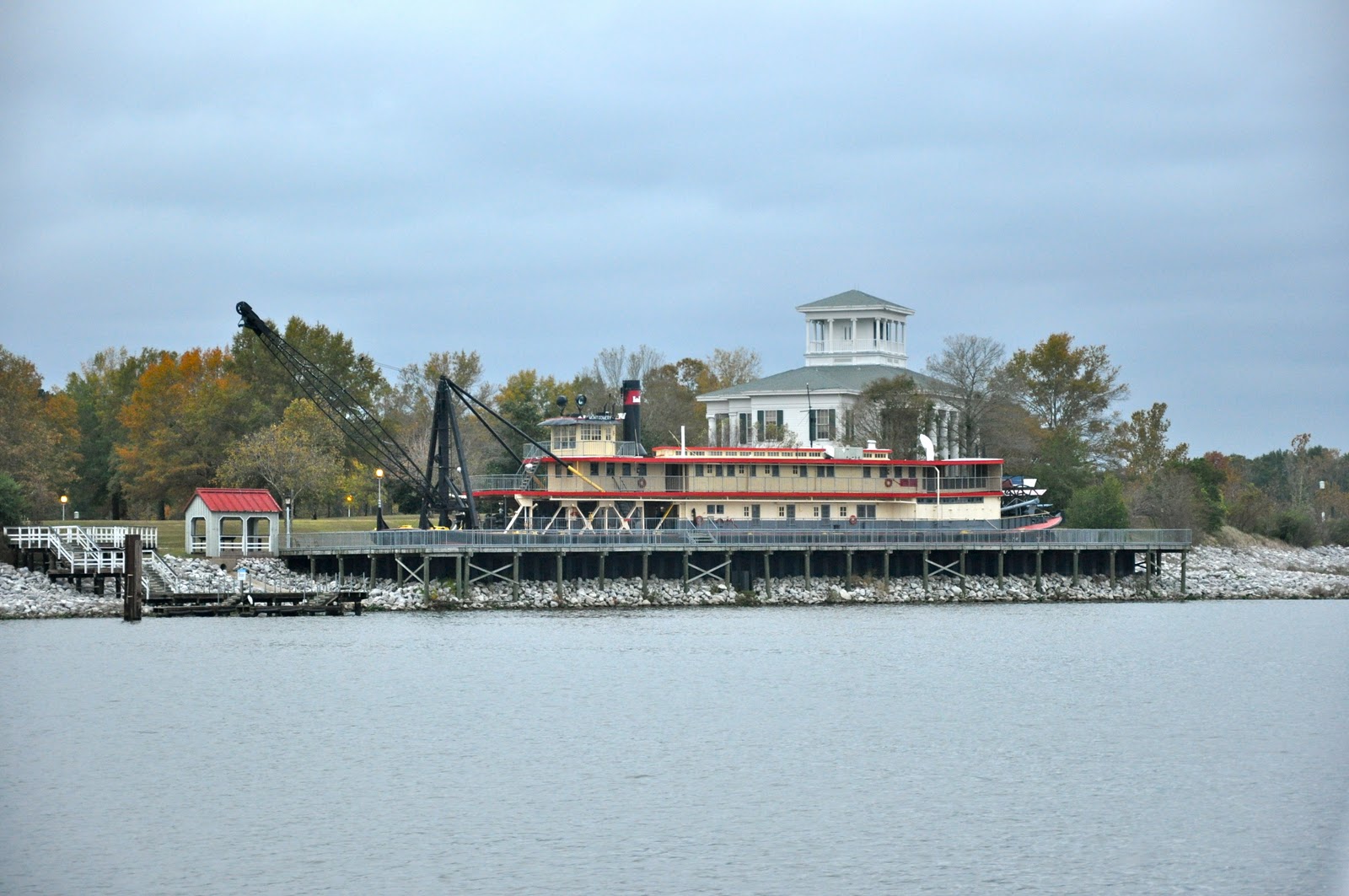 (Source: "The Montgomery"; Mary Frances IV) The Montgomery at the Tom Bevill Lock and Dam Visitor Center in Pickensville, Alabama
|
Towboats
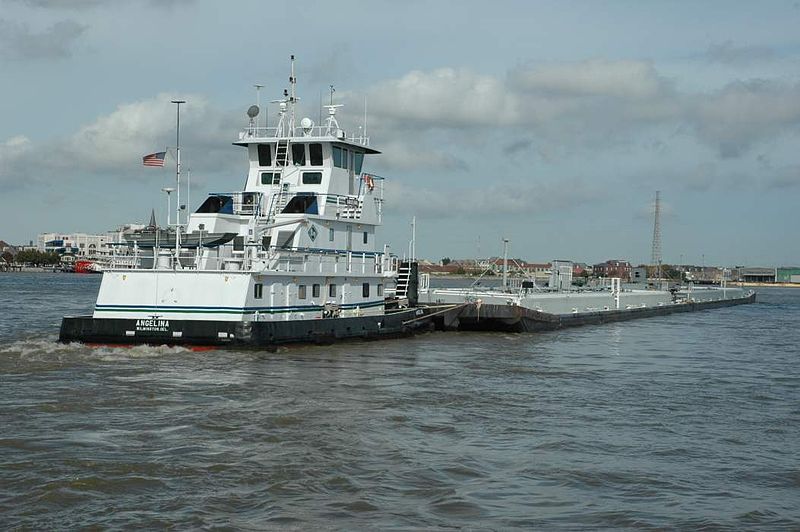
(Source: "Towboat Angelina"; Wikimedia Commons)
Towboats pushed barges up and down rivers, making trade more efficient.
“Towboats have been employed moving barges on all the navigable waters of the Western Rivers, and have been an important component of the American transportation system since the 1850s” (“Towboat History”).
“On the Lower Mississippi, strings of up to 60 barges were pushed on occasion. Today 15 barges is the more usual number on the upper rivers, because the limited size of river locks requires breaking tows into several pieces. On smaller rivers, towboats could only handle one or two barges” (“Towboat History”).
Towboats are still used today. As of 2008, they have been “a vital part of the U.S. marine transportation system which moves more than 800 million tons of cargo each year” (Wilkin). They carry "coal, grain and other commodities" (Wilkin).
“Towboats have been employed moving barges on all the navigable waters of the Western Rivers, and have been an important component of the American transportation system since the 1850s” (“Towboat History”).
“On the Lower Mississippi, strings of up to 60 barges were pushed on occasion. Today 15 barges is the more usual number on the upper rivers, because the limited size of river locks requires breaking tows into several pieces. On smaller rivers, towboats could only handle one or two barges” (“Towboat History”).
Towboats are still used today. As of 2008, they have been “a vital part of the U.S. marine transportation system which moves more than 800 million tons of cargo each year” (Wilkin). They carry "coal, grain and other commodities" (Wilkin).
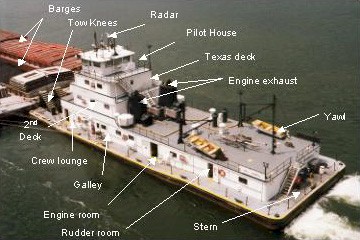 (Source: "Anatomy of a Towboat"; Shove it with a Towboat) Towboat Diagram
|
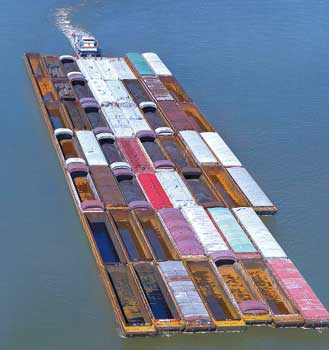 (Source: "Towboat with Many Barge"; McCormick School of Engineering) Towboat pushing multiple barges
|
Showboats
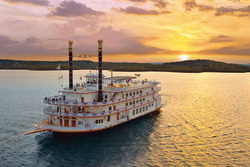
(Source: "Showboat Branson Belle Sunset"; Explore Branson)
Showboats were the most famous steamboats. They were used for theatrical and musical performances, circuses, and parties.
“Showboats were the floating palaces of the 19th and early 20th centuries. They were beautifully decorated and had theaters, galleries, ballrooms, and saloons. They traveled up and down rivers bringing plays and musical entertainment to river towns. Showboats would announce their arrival by playing their organ-like steam calliope” (“A History of Steamboats”).
“The Chapman family from England launched the first showboat in 1831 in Pittsburgh. . . .
. . . Other floating theaters soon followed the Chapman boat onto the waterways, as did circus boats featuring animal acts in addition to plays. The largest of these was the Floating Circus Palace of Gilbert R. Spalding and Charles J. Rogers, built in 1851, which featured an impressive equestrian exhibition. . . .
. . . Jerome Kern's 1927 musical, Show Boat (made into film versions in 1929, 1936, and 1951), dramatized the type of entertainment that showboats provided and depicted the lives of the showboat families and entertainers” (Sheets).
The showboat era ended in the 1940's. “The Goldenrod, the last known showboat to be on the [Mississippi\, was tied permanently at St. Louis in 1943” (Sheets).
“Showboats were the floating palaces of the 19th and early 20th centuries. They were beautifully decorated and had theaters, galleries, ballrooms, and saloons. They traveled up and down rivers bringing plays and musical entertainment to river towns. Showboats would announce their arrival by playing their organ-like steam calliope” (“A History of Steamboats”).
“The Chapman family from England launched the first showboat in 1831 in Pittsburgh. . . .
. . . Other floating theaters soon followed the Chapman boat onto the waterways, as did circus boats featuring animal acts in addition to plays. The largest of these was the Floating Circus Palace of Gilbert R. Spalding and Charles J. Rogers, built in 1851, which featured an impressive equestrian exhibition. . . .
. . . Jerome Kern's 1927 musical, Show Boat (made into film versions in 1929, 1936, and 1951), dramatized the type of entertainment that showboats provided and depicted the lives of the showboat families and entertainers” (Sheets).
The showboat era ended in the 1940's. “The Goldenrod, the last known showboat to be on the [Mississippi\, was tied permanently at St. Louis in 1943” (Sheets).
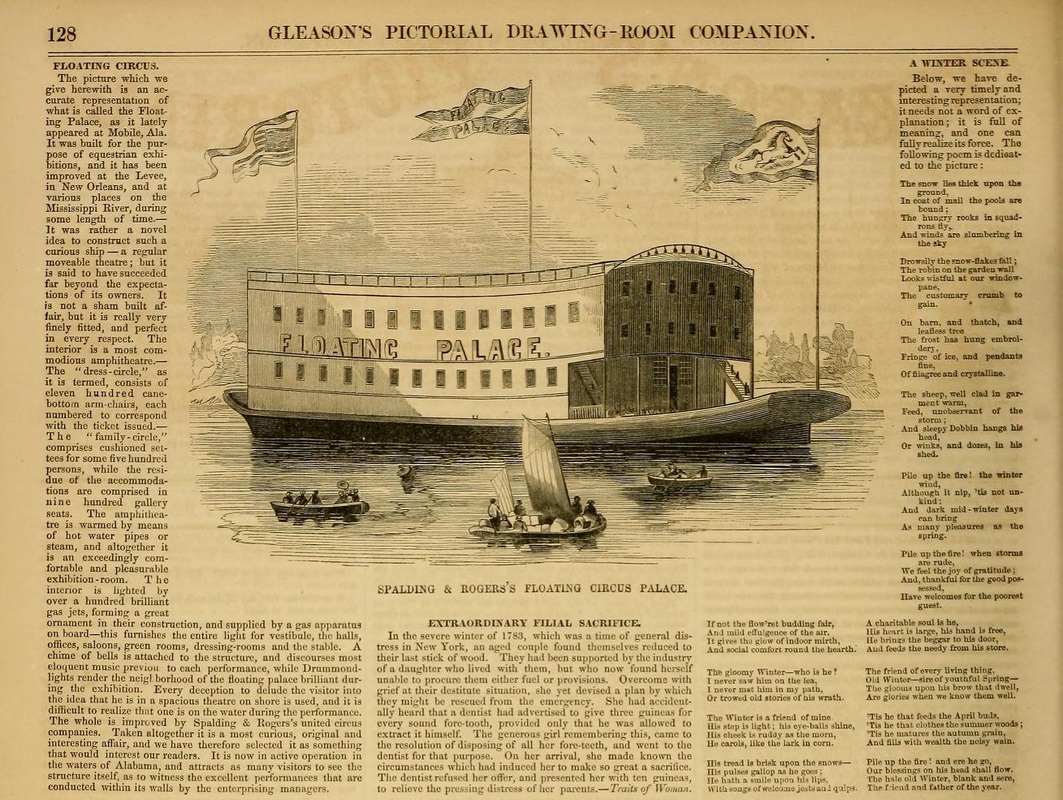 (Source: Gleason and Maturin; Internet Archive) "Spalding and Rogers's Floating Palace" - 1853
|
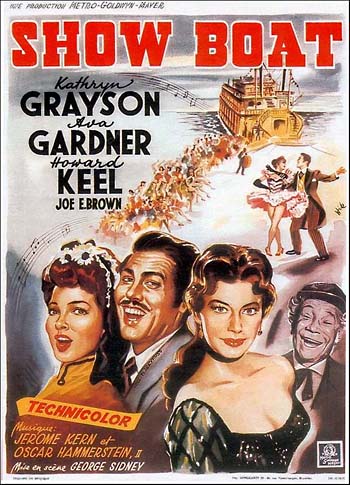 (Source: "Show Boat"; Film Affinity) Show Boat the Musical
|
